Seamless Leopard 24Oz Venti Cup Wrap SVG: A Designer’s Review
I pulled up the Seamless Leopard 24Oz Venti Cup Wrap SVG last week while planning a small batch of custom embroidered tote bags for a boutique client who wanted something bold and fashion-forward. The file itself is a digital download, marketed as a cup wrap template, but my eye went straight to the leopard pattern. I knew right away it could be far more than a tumbler accent—it had serious potential as a machine embroidery design if handled with the right digitizing mindset. After testing it on scrap canvas, a sweatshirt panel, and a patch, I’m ready to share how this graphic actually performs when you move it from screen to stitches.
First Impressions: A Wild Pattern with Real Studio Potential
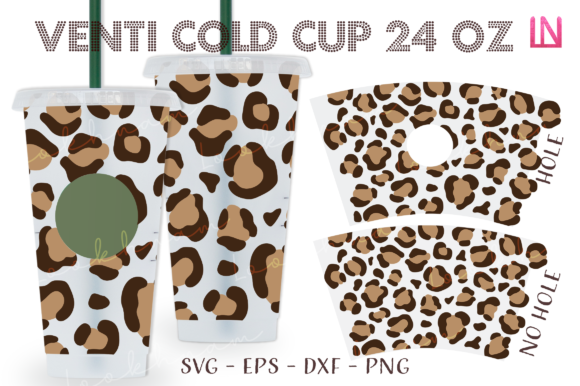
The mood of the Seamless Leopard 24Oz Venti Cup Wrap SVG hits immediately. The spots are confident, organic, and repeat seamlessly without obvious breaks. That seamless repeat is what makes it work for embroidery—you can tile the pattern across a large hoop or fill a generous area on a tote bag without awkward seams. The contrast between the deep brown spots, the warm tan background, and the black outlines gives the design a classic leopard look that feels both trendy and timeless. It’s not overly complicated; the shapes are bold enough to digitize cleanly, and the layout avoids the kind of micro-detail that often turns into a blur of thread on textured fabric. When I first opened the file, I immediately pictured it stitched onto a heavyweight canvas tote, a denim jacket back, or even a set of kitchen towels for a boutique home goods line. The visual personality is unapologetically wild, but in a way that reads as high-end rather than costume-y.
Translating the Graphic into Stitches: What Works and What Doesn’t
Because this is a Graphics product in the Crafts category, it’s not a pre-digitized embroidery file. You’ll need to convert the SVG into your preferred embroidery software, which gives you full control over stitch types, density, and color separation. I chose to digitize the leopard spots as a combination of satin stitch outlines and fill stitch interiors. The larger spots took well to a tatami fill with a light underlay, while the smaller perimeter spots required a bit more care—if your hoop size is tight, those tiny details can close up and lose definition. I’d recommend scaling the pattern so that the spots remain at least 10mm wide to keep the stitch clarity crisp. The seamless nature is a huge advantage for embroidery design: you can create a running stitch outline of a large area, fill it with this pattern, and it reads as one continuous animal print rather than a chopped-up graphic. On dark fabric, the pattern is forgiving because the high contrast helps it pop even with standard polyester thread. I tested it on a black sweatshirt sleeve and a natural linen tote, and the design held its own on both.
Real Project Test: A Custom Tote Bag for a Boutique Launch
My main test involved a 16” x 16” canvas tote bag that I was preparing for a local handmade shop. I digitized a large panel using the leopard pattern as a fill, hooped the bag with a sturdy cutaway stabilizer, and ran the design on a single-needle machine. I used three thread colors: a warm tan for the base, a deep espresso brown for the spot outlines, and a soft black for the inner spot accents. The stitching took about 45 minutes, and the result was exactly what I had hoped for—a rich, textured animal print that looked like a premium boutique product. The client loved it, and it sold out at their launch event. I also experimented with a smaller version on a baby bodysuit, but the stretchy cotton rib made the spots pucker slightly, so I’d stick to woven fabrics or use a heavier stabilizer for knits. For a sweatshirt, I’d suggest a no-show mesh stabilizer and a basting stitch to keep the fabric from shifting. The pattern’s boldness meant that even after washing, the design remained readable and sharp, which is key for any handmade product that’s going to be used daily.
Where This Design Thrives—and Where It Can Struggle
I see the Seamless Leopard 24Oz Venti Cup Wrap SVG shining on sturdy, flat surfaces: tote bags, pillow covers, aprons, tea towels, and even the back panels of denim jackets. It also works beautifully as an embroidered patch if you outline the pattern with a satin stitch border and apply it to caps or backpacks. The pattern’s scale is versatile—you can enlarge it for a dramatic statement on a blanket or shrink it down for a subtle accent on a pocket. However, I’d be cautious with tiny hoop sizes. If you try to squeeze the full leopard repeat onto a 4x4 hoop, the spots become too small to digitize cleanly, and you’ll lose the animal print effect. Small lettering layered over the pattern would also be a mistake; the spot density would compete with any text. On curved surfaces like caps, the pattern can distort if you don’t carefully adjust the distortion in your digitizing software. Stretchy fabrics demand extra care—always test on a scrap first. And because the design is a digital download, you’ll need to confirm what file formats you receive and whether they import cleanly into your embroidery program. The listing I saw was for a Venti cup template, but the leopard pattern itself is the real asset; you can ignore the cup shape entirely and use the seamless repeat as your embroidery canvas.
Practical Embroidery Designer Notes
Here’s what I’d tell any maker, Etsy seller, or small shop owner before they stitch out this pattern on a finished product:
- Test on scrap fabric first. Always run a sample on the same fabric and stabilizer you’ll use for the final product. This pattern’s contrast can look different on a screen than it does in thread.
- Check thread color contrast. The leopard spots rely on clear separation between the tan, brown, and black. Choose thread colors that stay true to the original SVG’s mood; a washed-out tan can make the whole design look muddy.
- Review stitch density. If you’re digitizing the fill yourself, aim for a density that doesn’t make the fabric stiff. A density of 4.5 to 5.0 stitches per mm for the fill and a slightly higher density for the satin outlines usually works well.
- Confirm your hoop size. The seamless repeat is great, but you need a hoop large enough to capture at least one full repeat of the pattern to avoid awkward breaks. I’d recommend a minimum 5x7 hoop for a visible leopard print panel.
- Inspect small details. Zoom in on the SVG and check the spot sizes. If any spot is under 5mm, consider simplifying it or omitting it in your digitized version to avoid thread breaks.
- Test in black and white. Convert the pattern to grayscale to see if the contrast holds up. This helps you anticipate how it will read on different fabric colors.
- Use the right stabilizer. A cutaway stabilizer is your best friend for dense fills; for lighter fabrics, a tear-away can work if the design isn’t too heavy.
- Check licensing. Since this is a digital download, look at the seller’s terms. Many graphic assets allow commercial use on finished physical products, but you should verify before you sell items with this design.
Final Thoughts on the Seamless Leopard 24Oz Venti Cup Wrap SVG for Embroidery Professionals
As an embroidery designer, I’m always looking for patterns that bring a sense of luxury and personality to handmade products without requiring hours of tedious digitizing. The Seamless Leopard 24Oz Venti Cup Wrap SVG checks that box. It’s not a ready-made embroidery file, so you’ll need to invest a little time in digitizing it yourself, but that also means you can tailor it exactly to your project’s needs. The result is a commercial-grade animal print that can elevate a humble tote bag into a boutique-worthy item, add an edge to a personalized gift, or give a cohesive brand look to a small shop’s merchandise line. I’d recommend it to craft business owners, Etsy sellers, and apparel decorators who want to add a reliable, high-impact print to their embroidery design assets. Just remember to test, tweak, and trust your thread choices—and you’ll end up with a finished product that wows customers every time.